UnaMesa Association · una mesa, one table · since 2006
Technology should answer to Us
Artificial intelligence is arriving in the spaces where we learn, teach, and care for one another. Will it strengthen or erode those relationships? That’s a question the machines cannot answer. Because it’s not a question about them. It is a question about the structure around them and who has a seat when that structure is decided. UnaMesa is a small nonprofit that has spent twenty years at the meeting point of technology and human services. Our work is to make sure that structure is one table, with everyone at it.
The moment
Every side is arming. Nobody chose the result.
What happens when capable AI is handed to each side of a “partnership”?
-
The classroom
A student’s assistant writes the essay in thirty seconds. The teacher’s assistant grades it and adds three sentences of encouragement. The number at the end of term is as high as it ever was. Nobody in the chain learned anything.
-
The clinic
An insurer’s system denies a claim in seconds without opening the file. The hospital’s system drafts the appeal. Nothing about the care is better, and the patient is still waiting.
-
The interview
Job postings are written by machines. Applicants use machines to create résumés, which are then rejected by the same machines. Nobody finds out whether the person and the job would have fit.
Each of them made the sensible move. The score survived. The purpose died. And nobody chose it.
A school exists so that children learn. A health plan and a hospital exist so that people get the care they need. A hiring process exists so that people and work can find each other. They are built to serve a shared purpose, with grades, claims, and résumés as imperfect measures. Put machines built to serve one side’s interest into the equation and only the contest remains.
That machine is the oldest picture in economics, the rational actor pursuing self-interest, poured into a product. It is not a flaw in the models. It is a choice about the harness: the structure around a model that decides what it can read, what it may do, whose instructions count, and who checks its work. The choice is still open.
Mutual gain
Every act has two parts. We keep books on only one.
Look at a restaurant bill. One line is the price of the meal, set before you arrived and charged to anyone. The other is the tip: what the evening was worth to the two of you, something neither you nor the server could have made alone. Every act between people has those two parts. There is what it does for you, and there is what it does to the thing you share: the trust, the relationship, the project, the pasture.
Markets are a magnificent machine for carrying the first part. A price carries it around the world. Nothing carries the second. The relationships that run healthcare, education, caregiving, and civic life, what Robert Putnam called social capital, have no ledger, no currency, and no seat in the decisions that spend them. So we spend them, for small gains in the first column, and call the loneliness, burnout, and distrust that follow a mystery.
Mutual gain is a way to keep the second book. Its instruments are old: a table where everyone can see one another, a promise with something behind it, a verdict from the people the promise was made to, and a record nobody can quietly rewrite. UnaMesa’s work is to keep those instruments honest at the speed and scale of modern technology, so that AI can be trusted to support the table and shared purpose rather than turning it into a battlefield.
What becomes possible
If AI is built to serve the table, not the contest.
None of this needs a new law or a new model. It needs the people responsible for a relationship, the people “at the table,” to clearly define the purpose and the roles for any machines meant to support them. AI can remember, remind, draft messages for a person to approve, and coordinate actions but it can never give a verdict or judge success. Here’s what that might look like:
A family that shares the load.
A daughter, her brother in another city, the neighbor who drives on Thursdays, and Dad himself. An assistant keeps the shared calendar, drafts the weekly update, gets the questions ready for the next appointment, and notices when someone needs a break. The family spends its time on each other, not on logistics.
A semester with a purpose.
In September a student, a family, and a teacher write down what success means for this student. An assistant tutors one step at a time, keeps notes all three can read, and finds the hour that a working parent and a busy teacher can both make. In June the three of them say how it went.
Visits that pick up where the last one ended.
Before a visit, an assistant helps the patient gather questions and note what has changed. Afterward it turns the plan into reminders and keeps the family and the care team on the same page. The clinicians who know the work decide what the tool may do and what it must never do.
Groups that keep going.
A walking group, a support circle, a congregation’s meal train. An assistant handles the sign-ups, the reminders, the rides, and who is bringing what, so the organizer gets to be a neighbor again instead of a dispatcher.

Una mesa
Spanish for one table. Everyone deserves a seat at it. This is the table at UnaMesa’s Palo Alto office, where in 2015 twenty-nine neighbors founded a launchpad for enterprises that value relationships over transactions.
Who we are
Twenty years at this table.
UnaMesa Association was founded in 2006 to find better ways of aligning technology innovation with social services and the public interest. We have worked beside the people who deliver care, teaching, and community support; built and held open tools in public trust; and incubated organizations that went on to stand on their own. Two things we learned shape everything on this page. The helping professions run on relationships, judgment, and promises kept over months, on value that never appears in a billing system. And good technology, left to itself, drifts toward the incentives of whoever owns it.
- 2006Founded in Palo Alto, California, as a 501(c)(3) public charity.
- 2007TiddlyWiki’s copyright placed in UnaMesa’s public trust, where it still rests for the benefit of its community.
- 5 million+People a year reached by partner Hesperian’s digital health guides after our three-year collaboration (2015).
- 29Founding members of the Community Launchpad, fifteen enterprises, one table (2015).
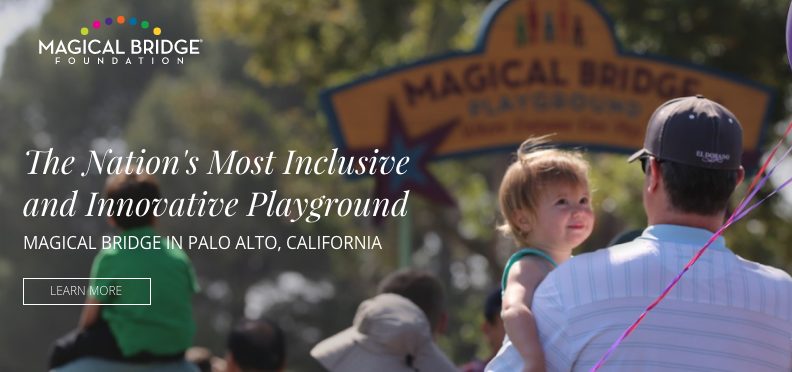
Magical Bridge Foundation
Heralded as the nation’s most innovative and inclusive playground when it opened in Palo Alto in 2015, Magical Bridge operated as part of UnaMesa while it grew. It now stands alone, building playgrounds where everyone plays across the Bay Area.
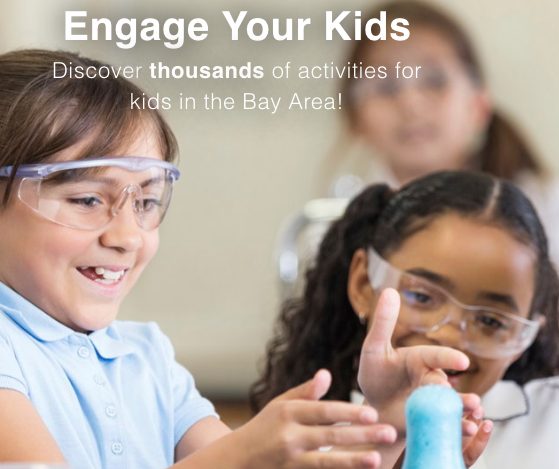
InPlay
Two-thirds of children from low-income households miss out on out-of-school programs. InPlay partners with school districts to connect every family with great learning opportunities, at free or reduced prices where it matters most.
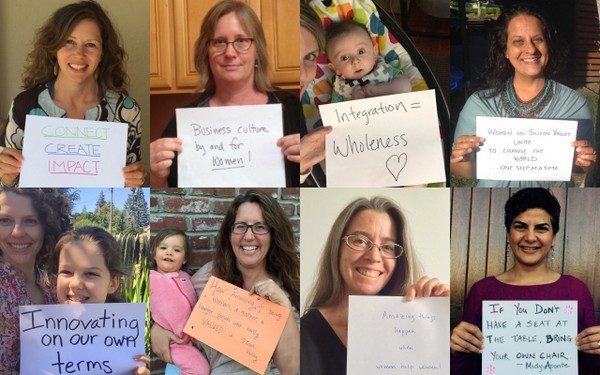
The Community Launchpad
Twenty-nine founders, most balancing careers against child care and family, came together at UnaMesa to build social enterprises through mutual support: a place where interactions replace transactions.
Belle Haven Action
Neighbors in Menlo Park’s Belle Haven formed a community group under UnaMesa’s sponsorship to improve the health and wellbeing of their neighborhood. It became a vital resource for COVID testing and vaccination, and in 2022 an independent nonprofit making sure residents have a seat at the table in planning their future.
Also: three years helping Hesperian turn Where There Is No Doctor into open digital health guides for community health workers; the Student Notebook and TiddlyManuals; SharedRecords with Dimagi; the Center for Learning Analytics in San Mateo County; and the Precision Health Equity Initiative. The whole story, 2006 to today →
Working groups and initiatives
The people who do the work set the table.
UnaMesa is a place where people who have skin in the game, the caregivers, providers, advisors, and mentors, can come together to develop ways of working with each other and with AI to produce radical increases in mutual gain. Each group below is hosted by people who do the work. Each is a work in progress, and each has room for you.
Precision Health Equity Initiative
Turning AI-based advances in risk assessment into personalized care, “one size fits one,” so that better tools reach the people at greatest risk. The health working groups carry its question into their own fields.
About PHEI →Recovery from Breast Cancer Treatment
Women recovering from breast cancer treatment, and the people who support them, developing supports for exercise, nutrition, mindfulness, and other tools to help women live their best lives.
About this group →Caregiver Support
Caregivers, care navigators, health aides, and others who support families through the experiences of cognitive decline and dementia.
About this group →Palliative Care
Health care providers, caregivers, and family members developing and implementing care that truly aligns with the needs and goals of an individual.
About this group →Women’s Health Study
An IRB-approved clinical study testing how social supports and “digital twins” enable better care, with a focus on women’s health.
About the study →Service Learning
Youth and those who work with youth developing opportunities and pathways for creating real value for their communities.
About this group →What we believe
Ancient wisdom, modern tools.
Human instruments of trust form the bedrock of society: a table, where everyone sits in view of one another; a seal, which marks a promise; a ledger, which does not forget. Society has relied on these structures for millennia. Our work is to keep them honest in an age of intelligent machines.
- Technology should answer to human purposes. Whether an AI agent is truly aligned with your interests is not, at root, a technical question. It is a structural one, about commitment, context, consent, and record. We work on the structure: humans decide, and every decision that matters is made by people, on the record.
- Success is judged by the people it serves. Engagements commit to purpose, not to metrics. Whether the purpose was served is decided by those closest to the outcome, always including the person being helped. Voice, not veto.
- Trust is earned and visible. Standing cannot be bought or claimed. It accumulates only through a public history of commitments kept: a record that is permanent, tamper-evident, and open for anyone to check.
- Care cannot be priced. But we can price commitments and make them visible, skin in the game that cannot be faked by talk. A system can register commitment and witness consent; it does not price care, and it does not pay for love.
The part that belongs to all of us
The developers will not decide this alone. They can’t.
The companies building these systems publish constitutions, run benchmarks, and promise alignment. Those are real advances, and none of them can answer the questions that matter in a clinic, a classroom, or a kitchen: aligned with whom, at which table, judged by whom? Those questions can only be answered by the people pursuing shared interests. The role of civil society in the age of AI is not to wait for better models. It is to set the tables.
- Ask “aligned with whom?”
When anyone claims a system is safe, aligned, or trustworthy, ask for which party, at which table, and who says afterward whether it served them.
- Clarify your purpose.
And who is “at the table” with you. A school is responsible for the table of student, family and teacher. A clinic for the patient’s. A company for the tables where its people make things together. Write them down, with who sits at each.
- Don’t arm your side.
The purchase that feels responsible this year, the detector, the denial engine, the grading assistant pointed at the students, is the one that closes the last gap where the purpose was living.
- Work with us.
Develop and highlight the ways of using tech to serve shared interests and create mutual gains.
Take part
There is a seat for you.
Whoever you are, the invitation is the same: partner with us, join a working group, or sponsor one.
Join a group, or sponsor someone’s place in one.
Caregivers, patients, students, neighbors: the people these tools are supposed to serve. Your experience is what the groups are built on.
Partner with a group in your field.
Schools, clinics, health plans, congregations, employers, towns: bring a classroom, a clinic, or a program where new ways of working can be tried, or sponsor a group for the people you serve.
Host a working group, or join one.
Clinicians, coaches, teachers, mentors: you know what good looks like. Help write the guidebooks, protocols, and indicators of success for your field.
Build what the groups ask for.
You are welcome at the table. The people who do the work set it, and they say what success looks like.
Sponsor a working group or an initiative.
Foundations, employers, and donors: back the people doing this work in the field that matters most to you.
Pull up a chair.
Whether you give, convene, write, build, or simply start asking better questions, the age of AI will be decided table by table. We would be glad to have you at ours.